

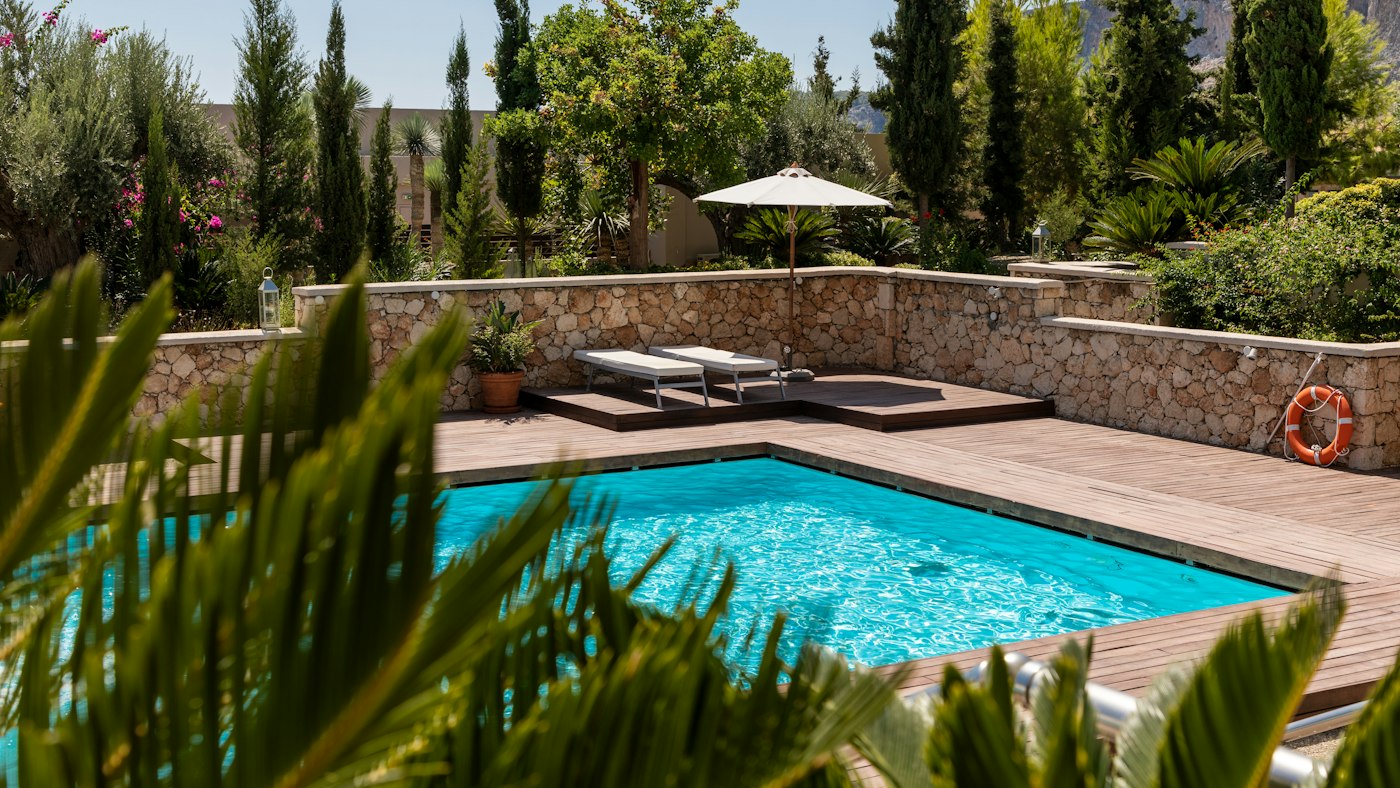
A pool is three systems, not one feature
Listing photos show blue water and a lanai set for guests. A buyer is actually taking on an aluminum structure that has stood through years of sun and storms, a set of mechanical equipment that runs every day, and a concrete or other shell finish that wears slowly until it needs attention. Those parts have different lifespans and different specialists. Thinking of the pool as one line item is how buyers end up surprised by a repair list after the inspection.
Separate them on your walk-through. Stand outside the cage and look at it as a structure. Walk to the equipment pad and look at it as machinery. Then look at the water, the waterline, and the deck as surfaces. Ask the seller for anything they have on each one: permits, receipts, service records, and the name of the pool company that maintains it. Owners who kept good records tend to have kept up the pool too.
The screen enclosure
Screen enclosures, often called pool cages, are aluminum frames with screen panels. Look at the frame for bent members, separated joints, and corrosion at fasteners and where the frame meets the deck or the house. Look at the screens for tears, sagging panels, and patched areas. Check that the doors close and latch. Look at where the enclosure attaches to the roof or fascia of the house, since that connection matters in wind. Water staining or damage at the attachment can point to a problem at the roofline as well.
Ask whether the enclosure was permitted when it was built or replaced. Enclosures are structures, and they are typically permitted and inspected in Brevard County. A screen repair company or aluminum contractor can evaluate the frame and give you an opinion. In many Viera neighborhoods, the association’s architectural guidelines also cover the enclosure’s color, style, and screen type, so ask what is required before planning a replacement.
- Frame members for bends, corrosion, and loose fasteners.
- Screens for tears, sagging, and patches.
- Doors that close and latch on their own.
- The connection to the house and any water staining there.
The equipment pad
The equipment pad usually includes a pump, a filter, plumbing and valves, a timer or automation controller, and sometimes a heater or heat pump, a salt chlorine generator, or a chemical feeder. Each piece has a data plate or label with a model and often a manufacture date or serial number that can help date it. Photograph those plates. A pool service company or pool contractor can tell you roughly how old each piece is and how it is performing.
While the system runs, listen and look. Loud bearings in a pump, leaks at fittings, weeping at the filter, salt crust on a salt cell, scorch marks or corrosion at electrical connections, and pressure gauges that read oddly are all worth noting. Ask whether the pump has been replaced recently and with what type. Equipment replacement is a normal part of pool ownership. Knowing what is near the end of its life lets you plan and negotiate instead of being surprised.
The shell, the waterline, and the deck
The pool surface wears over time. Look for rough spots, stains, discoloration, and areas where the finish has worn thin. At the waterline, check the tile for cracks, missing pieces, and loose grout. The coping, the edge cap around the pool, can separate from the deck or crack. A crack in the deck is common and may be cosmetic. A crack that runs into the pool shell, a deck that has shifted, or a pool that loses more water than evaporation would explain is a different question and needs a specialist.
Walk the deck and tap with your foot for hollow sounds on pavers or concrete. Look at drainage around the deck after rain if you can, since water that stands against the house or near the enclosure footings can cause other problems. If the seller mentions refilling the pool often, ask about it directly. A leak detection test can locate leaks in the shell or plumbing. That is a service, not something a buyer can judge from the side of the pool.
Hire someone who inspects pools
A general home inspection covers a lot, but inspectors set their own scope, and some limit how far they evaluate pools and pool equipment or recommend a pool specialist. Ask your inspector in advance what they include. If the answer is limited, hire a pool inspector or a licensed pool contractor to evaluate the pool, the equipment, and the safety features during your inspection period. You can look up a contractor’s Florida license on the DBPR licensing portal.
Schedule the pool inspection early in the inspection period so you have time to get repair estimates. Ask the inspector to run the equipment, check the heater if there is one, look at the electrical bonding and wiring visible at the pad, and comment on the shell and deck. Bring the report to your agent and use it to decide whether to ask for repairs, credits, or a price adjustment, or to accept the pool as it is with your eyes open.
Safety features and permits
Florida’s Residential Swimming Pool Safety Act, in Chapter 515 of the Florida Statutes, sets safety feature requirements for new residential pools, such as barriers, alarms, or other approved features. Requirements for a pool built years ago depend on when and how it was permitted. Ask the seller for permit history on the pool and enclosure, and look up the permits with the Brevard County building department or the city that has jurisdiction.
Whatever the law required when the pool was built, think about the people who will be around it. Grandchildren, visiting friends, and pets all change what makes sense. The federal Pool Safely campaign has practical information on layers of protection, such as barriers, door alarms, and supervision. Adding safety features after closing is common, and some may need permits or association approval.
Ongoing cost and time
A pool has ongoing costs: chemicals, electricity for the pump and any heater, water, and either your time or a pool service. Over the years, equipment needs replacement, the surface needs resurfacing, and the enclosure needs screen and frame repairs. Some homeowners also find that insurance carriers ask about pools and safety features when quoting a policy. A licensed insurance agent can tell you how a specific carrier treats a pool home.
Ask the seller what they spend on service and power, knowing that your use may differ. Ask the association whether there are rules about pool maintenance, enclosure appearance, or noise from equipment. A pool can be the best part of a Florida house. Going in with a realistic view of the cost and upkeep is how it stays that way.
How Amanda handles pool homes
Amanda McKnight, Florida REALTOR® SL3511173 with Compass Florida and the Carpenter Kessel Home Selling Team, is published as top 1% in Brevard with more than $60 million sold and over 150 transactions. On Viera pool homes she walks the cage, photographs the equipment plates, and books a pool specialist early in the inspection period so the pool is part of the decision instead of a surprise after it.
If you are looking at Viera pool homes, call 904.599.1468 or email amanda.mcknight@compass.com. Engineering, contractor, and insurance opinions come from licensed professionals. Making sure the right ones look at the pool before you commit is part of the job.
Sources
Quick answers
Does a home inspection cover the pool?
It depends on the inspector. Some include a basic look and some recommend a pool specialist. Ask before you book, and hire a pool inspector or licensed pool contractor if the scope is limited.
How can I tell how old the pool equipment is?
Photograph the data plates on the pump, filter, heater, and salt system, and ask the seller for receipts. A pool professional can usually estimate age and condition from the model and serial information.
Are deck cracks a problem?
Some are cosmetic. Cracks that reach the shell, shifted decking, or unexplained water loss deserve a specialist’s look and possibly a leak detection test.
Does the screen enclosure need a permit?
Screen enclosures are structures and are typically permitted. Ask the seller for permit history and check with the building department that has jurisdiction.
Can Amanda help me evaluate a Viera pool home?
Yes. Amanda helps buyers line up the right inspections during the contract. Call 904.599.1468 or email amanda.mcknight@compass.com.