

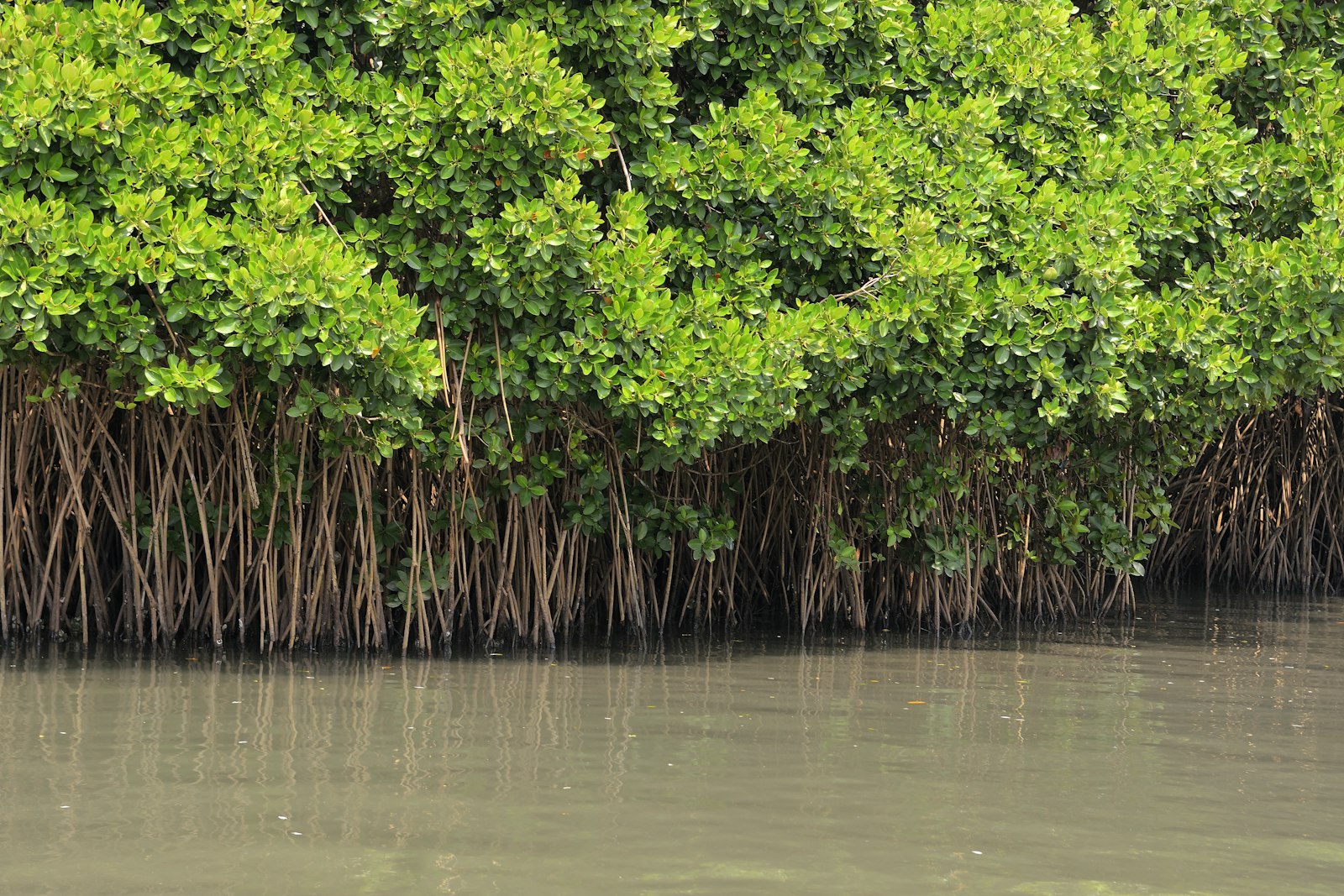
The plants on the bank are doing a job
Red, black, and white mangroves hold the edge of canals, the Indian River Lagoon, and the quieter pockets where a lot meets tidal water. Roots, canopy, and the muck underneath are what keep a shoreline from becoming a mud line after a hard tide. Owners often experience that edge as a blocked view. The state experiences it as habitat. Those two readings collide at the listing, because a buyer standing on the dock is looking at the same trees the seller has wanted to thin for years.
Treat the vegetation as its own file, the way you would treat a roof. Walk it in daylight. Note whether the trees are a narrow fringe in front of the house or a wider stand, whether prop roots have been cut, and whether the bank looks recently opened. Photographs from the listing appointment beat a memory of what the yard used to look like. The Merritt Island waterfront homes page is where people start a search. This guide is what you do when a specific lot still has, or conspicuously no longer has, mangroves.
Trimming is not the same act as removal
DEP describes trimming as cutting mangrove branches, twigs, limbs, and foliage. Trimming does not mean removing, defoliating, or destroying the trees, and it does not include cutting prop roots or aerial roots. Alteration is the broader, more serious category: the work that takes the trees out or damages them past a trim. Owners blur those words on purpose when a view is the goal. Buyers and inspectors do not. A stump line, a raw mud bank, and a pile of cut roots read as alteration even if the seller calls it maintenance.
The Mangrove Trimming and Preservation Act, sections 403.9321 through 403.9333 of the Florida Statutes, is the state framework. DEP says that for trimming and alteration of mangroves, that act and any lawful rules of a delegated local government are the regulations that apply, with the exceptions the statute itself spells out. Do not let a landscaper, a neighbor, or a listing remark substitute for that text. If you want a lower canopy than the exemption allows, DEP says you are in individual-permit territory, and mitigation can be part of that path. Ask the district office before anyone starts.
What the homeowner exemption actually turns on
DEP’s mangrove FAQ states a narrow homeowner exemption. It applies when the mangroves are in a riparian mangrove fringe and are no taller than 10 feet, the owner does not trim them below 6 feet, and the owner does not defoliate any mangrove. If the trees are taller than 10 feet, the FAQ says the owner needs a professional mangrove trimmer and may still be exempt. If the stand is not a riparian mangrove fringe, the FAQ says the owner needs a permit and a professional mangrove trimmer. Those are DEP’s words, summarized here so you know which questions to ask. They are not a green light for your lot.
A professional mangrove trimmer is a person who has met the qualifications in section 403.9329, Florida Statutes. DEP requires that person for general permits and for certain exempt work. Whether your shoreline is a riparian mangrove fringe is a site call, not a guess from the back porch. Width of the fringe, ownership, and how the trees sit on the water all matter. Send photos and a survey to the DEP district office and let them say which path you are on. A blog cannot see your bank.
- Identify the trees before anyone calls them weeds or sea grape.
- Measure height before a trim, and photograph the pre-trim condition.
- Ask DEP whether the stand is a riparian mangrove fringe.
- Stop if the plan includes roots, defoliation, or removal.
Why a cleaned-up bank shows up in the sale
Sellers clear a view the month they decide to list, then act surprised when the first weekend of showings is about the shoreline instead of the kitchen. Buyers who have owned waterfront, and the marine contractors they bring, notice a canopy that ends in a straight fresh cut, soil that has slumped where roots were, and a difference between the listing photos and an older aerial. The objection is not aesthetic. It is “who allowed this, and am I buying the enforcement file.”
You do not fix that objection with a round number in the remarks. You fix the temperature with paper: a DEP authorization if one exists, a professional trimmer’s invoice if the work was a trim, and a plain statement if you have neither. An empty file is a fact. It is not proof the trees were cut illegally, and an old authorization is not proof today’s bank matches what was approved. If a buyer, a neighbor, or an agency is asserting a violation, that is an enforcement question for DEP and, if someone needs advice on their own exposure, a Florida attorney. Do not let the listing declare the bank grandfathered.
Who actually decides
DEP district offices process mangrove applications unless a local government has been delegated. The delegated list published by DEP has included counties such as Miami-Dade, Broward, Hillsborough, Pinellas, and Sarasota, plus a few municipalities. Brevard County was not on that list. Check the page again before you rely on this sentence, because delegations change, and then call the Central District if Brevard is still absent. The application form DEP posts covers notice of a general permit under section 403.9327 and an individual permit under section 403.9328.
Brevard County Natural Resources still matters for other shoreline work. Seawalls, revetments, and dredging are a different permit conversation, which is why the seawall guide exists on its own. A mangrove question that turns into fill, a new wall, or a dock can pick up those other reviews, including the U.S. Army Corps of Engineers where federal authorization is required. Ask each agency what it regulates. Do not assume the county building counter is the mangrove counter.
What belongs in the listing folder
Before the photographer treats the shoreline as a sunset, collect a current survey, daylight photos of the entire edge, any DEP or county paper, and the name of anyone who trimmed the trees in the years you have owned the house. If a prior owner did the work, say you do not have their file. Buyers can live with an unknown. They do not live well with a story that changes between the first showing and the inspection.
If you still want a view, apply first and trim second. A professional mangrove trimmer who will put the scope in writing is more useful than a lawn crew that “does waterfront all the time.” Keep the before-and-after photos with the closing documents you will hand the next owner. The person who buys the house inherits the bank you leave, including any unfinished agency question. Selling a Merritt Island home is already a paperwork exercise. The trees are one more folder, not a Saturday project.
What this is not
This is not a seawall article. Caps, tiebacks, and lean belong on that page. This is not a dock-and-lift article. Boat fit and bridge clearance belong on those pages. A lot can have mangroves and a wall, or mangroves and no dock, and the permits do not collapse into one sentence about waterfront condition.
This is also not a fine schedule, a promise that a 6-foot trim is available on your lot, or a substitute for the statute. Heights in the DEP FAQ are statewide descriptions of an exemption with conditions. Your fringe either qualifies or it does not. Mitigation, restoration, and after-the-fact authorization are agency decisions. If you already cut and you are worried, call DEP with the facts rather than planting a new story in the listing.
How this gets handled with a local advisor
Amanda McKnight, Florida REALTOR SL3511173 with Compass Florida and the Carpenter Kessel Home Selling Team, is published as top 1% in Brevard with more than $60 million sold and over 150 transactions. On Merritt Island waterfront listings she asks what is growing on the bank at the first walk, and she would rather have a thin DEP file than a freshly opened view with no paper behind it.
If you are selling or buying and the shoreline looks recently changed, call 904.599.1468 or email amanda.mcknight@compass.com. We will line up the questions for DEP and keep the seawall conversation on the seawall page. We will not call a cleared bank routine landscaping.
Sources
Quick answers
Can I trim mangroves myself on Merritt Island?
Sometimes, and only inside a narrow exemption. DEP’s FAQ allows a homeowner trim in a riparian mangrove fringe when the trees are no taller than 10 feet, you do not cut below 6 feet, and you do not defoliate them. Taller trees or a stand that is not a fringe move you to a professional mangrove trimmer and often a permit. Confirm your shoreline with DEP before you cut.
Is cutting the roots allowed if I leave the canopy?
No. DEP defines trimming as branches, twigs, limbs, and foliage. It says trimming does not include cutting prop roots or aerial roots, and it does not mean removing or destroying the trees.
Does Brevard County issue the mangrove permit?
Check DEP’s delegated-government list. Brevard was not on it. If that is still true, mangrove trimming applications go to the DEP district office. Other shoreline work, including walls, can still involve the county.
Will buyers care if the view was opened years ago?
They care whether paper exists. An old authorization answers what was approved then. It does not answer whether the bank today matches that approval. Show the file or say you do not have one.
Can Amanda approve a mangrove trim?
No. DEP or a delegated local government makes that call, and a professional mangrove trimmer does the work the statute assigns to them. Amanda makes sure the question is in the listing file before a buyer is surprised. Call 904.599.1468 or email amanda.mcknight@compass.com.