

The listing says acreage. The county says a zoning district.
West of Melbourne, around Lake Washington, the land looks permissive. Fences, barns, a motorhome beside a pole barn, somebody’s tractor in the shade. What you are seeing is a mix of legal uses, old allowances, and projects nobody ever permitted. Your parcel does not inherit the neighbor’s luck. Brevard County zoning and the comprehensive plan are the rulebook, and the Planning and Zoning office is where you ask what a specific district allows. Start there, with the parcel ID from the Property Appraiser, before you price the property as a horse farm or an RV compound.
Bring a plain description, not a dream. “Two horses, a three-stall shelter, and a travel trailer parked off the driveway” is a question the county can react to. “We want to live off the land” is not. Ask whether the use is allowed by right, whether it needs a conditional use or a variance, and what setbacks and lot-size minimums apply. Write down the name of the person and the date. Verbal encouragement is not a permit. If the answer is “that district does not allow it,” believe the answer and change the parcel or change the plan.
Horses are a zoning question and a neighbor question
Livestock is not a paint color. Some agricultural and rural residential districts in Brevard contemplate animals. Others do not, or they limit numbers, shelters, and how close a stall can sit to a property line. Do not copy a number of horses off a Facebook group. Ask the county about the district on this folio, and ask what structure the animals need in order to be legal. A shed you drag into the pasture still wants a look at setbacks and permits.
Then stand outside and be a neighbor. Horses mean files, feed, flies, and a routine that starts early. The people next door may already live that life, or they may have bought the acreage for quiet and a view of your future fence. Zoning can allow an animal the cul-de-sac will still fight about if you ignore setbacks or drainage. Manure and stormwater are not details to invent a system for in a blog. If you need a plan, a county environmental reviewer or a qualified contractor should look at the site. Amanda’s job is to stop you from paying a residential price for an agricultural plan the parcel cannot host.
- Confirm the zoning district on this parcel, not the street’s reputation.
- Ask about animal limits, shelter rules, and setbacks in writing or in a dated note.
- Check that the septic field and the well are not where the paddock has to go.
- Meet the use you are buying by visiting at feeding time, not only at sunset.
An RV pad is not “just parking”
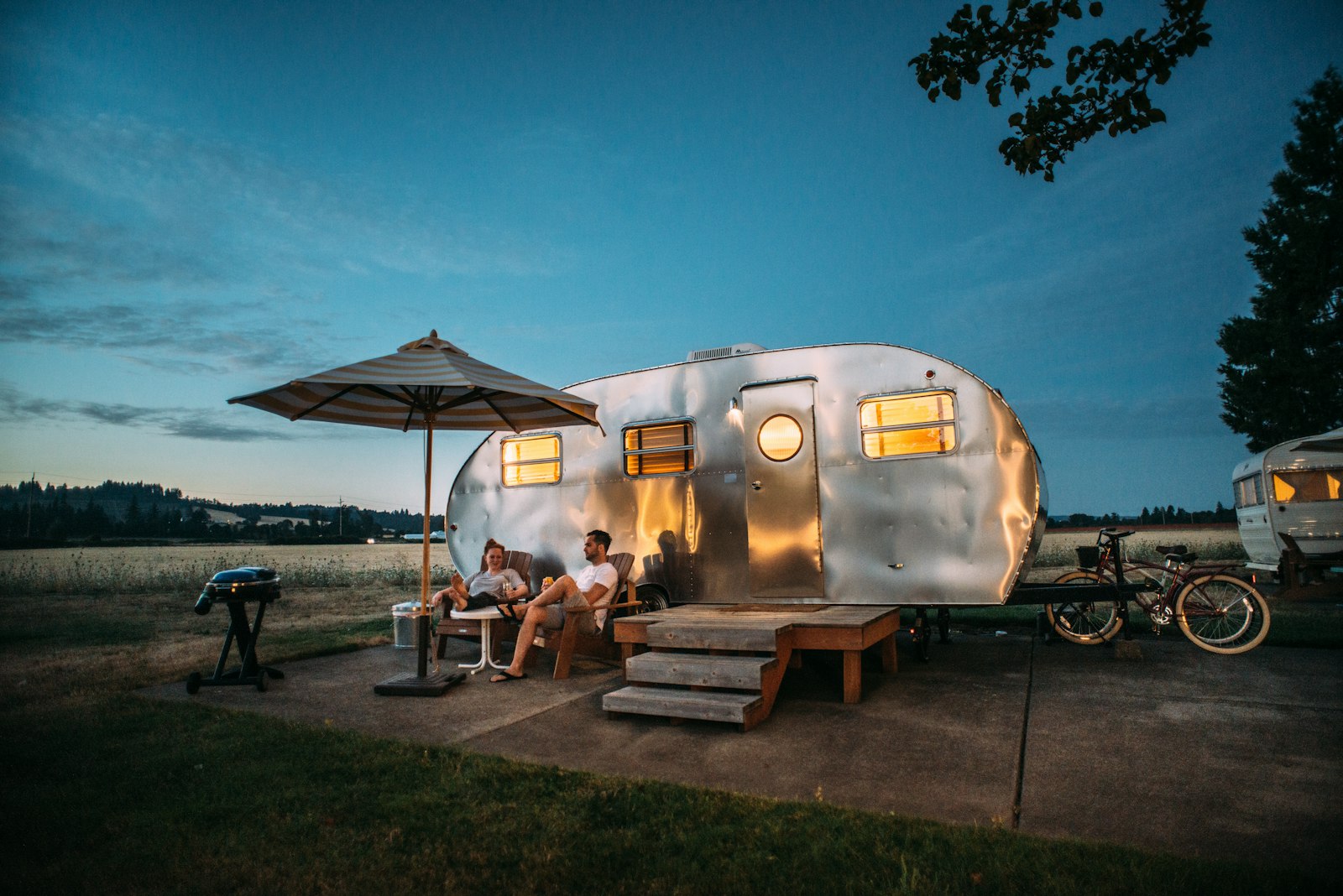
A motorhome behind the house feels temporary until it has a pad, a pedestal, a sewer connection, and a relative living in it. Those are different county questions. Parking your own RV on your property while you use the house may be treated differently from creating a second place to live, and the difference is exactly where people get in trouble. If anyone will sleep in the rig as a residence, say that out loud at Planning and Zoning. Do not describe a dwelling as storage.
Electrical pedestals and plumbing are permit work. Tying an RV into a septic system that was sized for the house can overload the system you just had inspected for the purchase. That is a septic question for a licensed contractor and the health department, not a weekend project. Setbacks from property lines and from the drain field still apply to the pad. A cleared spot under the oaks is not a legal site just because the truck fits.
Metal shops and barns need paper
The metal building is the Lake Washington dream: lifts, tools, a fan, a place to get out of the rain. It is also a structure. Brevard County permits buildings, and the size, the use, the slab, the electric, and the distance to the line all matter. A kit that arrived on a truck from another state still has to satisfy the Florida Building Code and the local permit process. “Agricultural exemption” is a phrase people repeat and rarely finish reading. Ask the building department whether your specific building, on your specific parcel, for your specific use, is exempt from anything. Get the answer from them.
Unpermitted shops are a closing problem and a resale problem. Lenders notice. The next buyer’s insurance agent notices. The county can notice later, which is the expensive version. If the building is already there, ask for the permit. If there is no permit, price the risk with a contractor who can tell you what it would take to legalize or remove it, and decide whether that number belongs in the offer. Do not let a 40-foot clear span hypnotize you out of the file folder.
Wells, septic fields, and the pad you wanted
The uses in this article collide on the same dirt. The drain field wants to stay undisturbed. The well wants its setbacks. The horses want dry ground. The RV wants a pad. The shop wants a slab and a driveway that does not become a river. Draw them on one sketch before you fall in love. If the only flat acre is the drain field, you do not have a shop site. You have a septic system with a nice view.
Flood-prone ground and wetlands show up on acreage even when the house pad is high and dry. Brevard’s natural resources permitting staff can tell you whether a wetland or a floodplain rule is in the way of the fill you were about to order. The FEMA map is a start. It is not a building permit. If a seller says they have “always parked the rig there,” ask what happens in a summer rain. Then go look after a summer rain if you can.
Neighbors, roads, and the use that is legal but miserable
County approval is the floor, not the friendship. A legal rooster situation is not the subject here, but a legal compressor at 6 a.m. and a legal horse trailer on a narrow easement road can still make you the topic of the road. Look at how the street is maintained, who shares the driveway easement, and whether a truck and trailer can turn around without using someone else’s grass. Easements are recorded. Read them. An easement that allows you to pass may not allow you to store a fifth-wheel on it.
Visit on a Saturday when people are using their shops. The sound of metalwork carries across pasture better than a listing photo suggests. If you need silence, do not buy the parcel between two fabricators and call it peace and quiet. If you need to run a loud shop, do not buy the parcel whose neighbors are on half-acre lawns and expect applause. Zoning might allow both. The daily life will still happen.
What to have in hand before you offer
Parcel ID, zoning district, a written or emailed county response about the animals, the RV, and the building you want, the septic and well locations, and any permits for structures already standing. If the county needs a pre-application meeting, book it during the inspection period, not after you own the problem. A survey is what keeps the setback argument from becoming a tape-measure fight in the dirt.
Budget time. Rural permits do not move at the speed of a model-home selection sheet. If your plan only works if a variance is granted, you are buying a maybe. Price the property as the use that is allowed today, and treat the variance as upside you might never get. Your contract deadlines have to fit that honesty. Amanda will nag you about the dates. The county will not extend your inspection period because the horses were a surprise.
- Pull zoning from the county using the parcel ID.
- Ask about horses, RV living versus RV storage, and outbuildings separately.
- Match the shop and the pad to the drain field and the well.
- Do not pay horse-farm money for a parcel that cannot legally have a horse.
Confirm it with the county, then fall in love
Amanda McKnight, Florida REALTOR® SL3511173 with Compass and the Carpenter Kessel Home Selling Team, is published as top 1% in Brevard with more than $60 million sold and over 150 transactions. She likes a shop and a pasture as much as the next person who grew up understanding tools. She will still make the zoning call the first call, because a pretty gate is not an approval.
If you are shopping Lake Washington for horses, a rig, or a metal building, call 904.599.1468 or email amanda.mcknight@compass.com before you write the use into your budget. Bring the parcel ID if you have one. The county decides what is allowed. Amanda makes sure you ask while the deposit is still yours.
Sources
Quick answers
Can I keep horses on any Lake Washington acreage parcel?
No. It depends on the zoning district, the lot, and the county’s rules for that use. Ask Brevard County Planning and Zoning about the specific parcel. A neighbor’s horses are not your permit.
Do I need a permit for a metal workshop?
Assume yes until the county building official tells you otherwise for that building and that use. Kit buildings and “agricultural” labels are not a blanket exemption. Ask before you order the steel.
Can my family live in an RV on the property?
Storing an RV and creating a place someone lives in are different questions. Describe the real plan to Planning and Zoning, and do not tie a residence into a septic system without a licensed contractor and the proper permit.
What if the shop is already built but has no permit?
Treat it as a risk. Ask the county what legalizing it would require, get a contractor’s view of the cost, and put that number in the negotiation. Do not assume it will be ignored forever.
How does Amanda handle these properties?
She pulls the parcel into a zoning conversation early and will not market a forbidden use as a feature. Call 904.599.1468 or email amanda.mcknight@compass.com. Permit decisions stay with the county.